admin

Kano Ecosystem Monthly Digest February Spotlight: Advancing Digital Innovation, Financial Inclusion, and Civic Engagement in Kano State

Across Kano State’s growing innovation landscape, collaboration, inclusion, and institutional strengthening continue to shape the direction of digital and civic development. From strategic fintech engagement and ecosystem validation workshops to grassroots digital activation and youth civic education, recent activities reflect a coordinated effort to build systems that are practical, inclusive, and impact-driven.At the institutional level, the Kano State Information Technology Development Agency (KASITDA) recently hosted the OPay management team as part of ongoing engagements with fintech operators in Kano State. The meeting focused on expanding digital payment adoption, improving financial inclusion, and exploring collaborative pathways to support MSMEs and grassroots entrepreneurs. As digital transactions become increasingly central to economic participation, strengthening partnerships between regulators and fintech providers remains essential to building secure, accessible, and innovation-driven financial systems across the state.In a related ecosystem engagement, the Director-General/CEO of KASITDA delivered a keynote address at the Stakeholders Engagement and Validation Workshop under the Kano Digital & Innovation Stakeholders Mapping Project, organized by Enovate Lab. He was represented by Engr. Naja’atu Kabir Mustapha, IT Infrastructure and Compliance Officer of the Agency. The workshop convened actors across government, innovation hubs, startups, academia, and the private sector to validate research findings and strengthen coordination within Kano’s digital ecosystem. The engagement reaffirmed KASITDA’s commitment to evidence-based policy design, inclusive innovation, and strategic partnerships aimed at accelerating the growth of Kano’s digital economy.Beyond policy rooms and institutional dialogue, digital engagement also moved directly into communities through the Digital Community Fair (DCF). Organized by Blue Sapphire Hub and funded by the UK International Development, the two-day program was held across three Northern Nigerian states: Jigawa State, Katsina State, and Kano State. Designed as a hands-on digital engagement platform rather than a conventional tech conference, the fair brought technology closer to everyday people.Each location recorded over 400 participants, creating space for community members to interact directly with digital solutions through live demonstrations, exhibitions, and open engagement sessions. Conversations during the fair explored governance, entrepreneurship, service delivery, and digital inclusion within the context of Northern Nigeria’s realities. A defining feature of the event was its structured inclusion approach, including a dedicated women-only engagement day and active participation of Persons with Disabilities (PWDs). By prioritizing access and practicalexperience, the Digital Community Fair transformed digital transformation from an abstract concept into something tangible and relatable.While digital innovation expands across sectors, civic education is also receiving structured attention through the Governance Ambassadors Program (GAP) initiated by Startup Kano Center for Innovation Development and supported by The Nigeria Youth Futures Fund (NYFF). GAP is a civic education initiative designed to strengthen democratic awareness and participation among secondary school students in Kano State through measurable, impact-focused programming.The program is currently being implemented across ten secondary schools, combining in-person civic education workshops, leadership sessions, and an inter-school essay competition aimed at deepening critical thinking around governance and accountability. At this stage, essays submitted by participating students are being carefully graded, marking a key transition toward the upcoming Grand Finale, where selected finalists will present and be recognized for outstanding civic reasoning and engagement.Alongside physical outreach, GAP includes developing a mobile-responsive digital civic education platform to ensure continued access to learning resources beyond workshop sessions. With clearly defined performance targets including direct student training, measurable improvement in civic knowledge assessments, and digital engagement benchmarks, the program is structured not as a one-off intervention, but as a sustainable civic learning framework.Complementing these efforts in digital and civic advancement, the Climate Innovation and Entrepreneurship Development (CIED) Bootcamp is also contributing to ecosystem growth by equipping young innovators and founders with practical tools to address climate challenges through entrepreneurship. The bootcamp is designed to strengthen participants’ capacity in problem definition, solution design, sustainability modeling, and impact measurement. Through structured sessions, mentorship, and applied learning exercises, participants are being guided to develop climate-focused ventures that are both environmentally responsible and economically viable. By integrating innovation, enterprise development, and climate resilience thinking, the CIED Bootcamp is reinforcing Kano State’s broader commitment to building a future-ready, impact-driven innovation ecosystem.Taken together, these initiatives reflect a broader ecosystem shift in Kano State: strengthening regulatory-fintech collaboration, validating digital ecosystem strategy, bringing technology directly to communities, building civic capacity among young people, and accelerating climate-focused entrepreneurship. The common thread across all these efforts is intentional design policies grounded in evidence, programs built around access, and systems structured for long-term impact.As grading continues for the Governance Ambassadors Program essays, ecosystem collaborations advance, and climate innovation capacity deepens through the CIED Bootcamp,Kano’s innovation landscape continues to demonstrate that sustainable development happens when institutions, communities, young people, and emerging founders are meaningfully included in the process.
Kano Ecosystem Monthly Digest February Spotlight: Advancing Digital Innovation, Financial Inclusion, and Civic Engagement in Kano State Read More »

February Spotlight: Advancing Digital Innovation, Financial Inclusion, and Civic Engagement in Kano State

Across Kano State’s growing innovation landscape, collaboration, inclusion, and institutional strengthening continue to shape the direction of digital and civic development. From strategic fintech engagement and ecosystem validation workshops to grassroots digital activation and youth civic education, recent activities reflect a coordinated effort to build systems that are practical, inclusive, and impact-driven. At the institutional level, the Kano State Information Technology Development Agency (KASITDA) recently hosted the OPay management team as part of ongoing engagements with fintech operators in Kano State. The meeting focused on expanding digital payment adoption, improving financial inclusion, and exploring collaborative pathways to support MSMEs and grassroots entrepreneurs. As digital transactions become increasingly central to economic participation, strengthening partnerships between regulators and fintech providers remains essential to building secure, accessible, and innovation-driven financial systems across the state. In a related ecosystem engagement, the Director-General/CEO of KASITDA delivered a keynote address at the Stakeholders Engagement and Validation Workshop under the Kano Digital & Innovation Stakeholders Mapping Project, organized by Enovate Lab. He was represented by Engr. Naja’atu Kabir Mustapha, IT Infrastructure and Compliance Officer of the Agency. The workshop convened actors across government, innovation hubs, startups, academia, and the private sector to validate research findings and strengthen coordination within Kano’s digital ecosystem. The engagement reaffirmed KASITDA’s commitment to evidence-based policy design, inclusive innovation, and strategic partnerships aimed at accelerating the growth of Kano’s digital economy. Beyond policy rooms and institutional dialogue, digital engagement also moved directly into communities through the Digital Community Fair (DCF). Organized by Blue Sapphire Hub and funded by the UK International Development, the two-day program was held across three Northern Nigerian states: Jigawa State, Katsina State, and Kano State. Designed as a hands-on digital engagement platform rather than a conventional tech conference, the fair brought technology closer to everyday people. Each location recorded over 400 participants, creating space for community members to interact directly with digital solutions through live demonstrations, exhibitions, and open engagement sessions. Conversations during the fair explored governance, entrepreneurship, service delivery, and digital inclusion within the context of Northern Nigeria’s realities. A defining feature of the event was its structured inclusion approach, including a dedicated women-only engagement day and active participation of Persons with Disabilities (PWDs). By prioritizing access and practical experience, the Digital Community Fair transformed digital transformation from an abstract concept into something tangible and relatable. While digital innovation expands across sectors, civic education is also receiving structured attention through the Governance Ambassadors Program (GAP) initiated by Startup Kano Center for Innovation Development and supported by The Nigeria Youth Futures Fund (NYFF). GAP is a civic education initiative designed to strengthen democratic awareness and participation among secondary school students in Kano State through measurable, impact-focused programming. The program is currently being implemented across ten secondary schools, combining in-person civic education workshops, leadership sessions, and an inter-school essay competition aimed at deepening critical thinking around governance and accountability. At this stage, essays submitted by participating students are being carefully graded, marking a key transition toward the upcoming Grand Finale, where selected finalists will present and be recognized for outstanding civic reasoning and engagement. Alongside physical outreach, GAP includes developing a mobile-responsive digital civic education platform to ensure continued access to learning resources beyond workshop sessions. With clearly defined performance targets including direct student training, measurable improvement in civic knowledge assessments, and digital engagement benchmarks, the program is structured not as a one-off intervention, but as a sustainable civic learning framework. Complementing these efforts in digital and civic advancement, the Climate Innovation and Entrepreneurship Development (CIED) Bootcamp is also contributing to ecosystem growth by equipping young innovators and founders with practical tools to address climate challenges through entrepreneurship. The bootcamp is designed to strengthen participants’ capacity in problem definition, solution design, sustainability modeling, and impact measurement. Through structured sessions, mentorship, and applied learning exercises, participants are being guided to develop climate-focused ventures that are both environmentally responsible and economically viable. By integrating innovation, enterprise development, and climate resilience thinking, the CIED Bootcamp is reinforcing Kano State’s broader commitment to building a future-ready, impact-driven innovation ecosystem. Taken together, these initiatives reflect a broader ecosystem shift in Kano State: strengthening regulatory-fintech collaboration, validating digital ecosystem strategy, bringing technology directly to communities, building civic capacity among young people, and accelerating climate-focused entrepreneurship. The common thread across all these efforts is intentional design policies grounded in evidence, programs built around access, and systems structured for long-term impact. As grading continues for the Governance Ambassadors Program essays, ecosystem collaborations advance, and climate innovation capacity deepens through the CIED Bootcamp, Kano’s innovation landscape continues to demonstrate that sustainable development happens when institutions, communities, young people, and emerging founders are meaningfully included in the process.

February Spotlight: Advancing Digital Innovation, Financial Inclusion, and Civic Engagement in Kano State Read More »

The Math of Sustainability Towards Net Zero

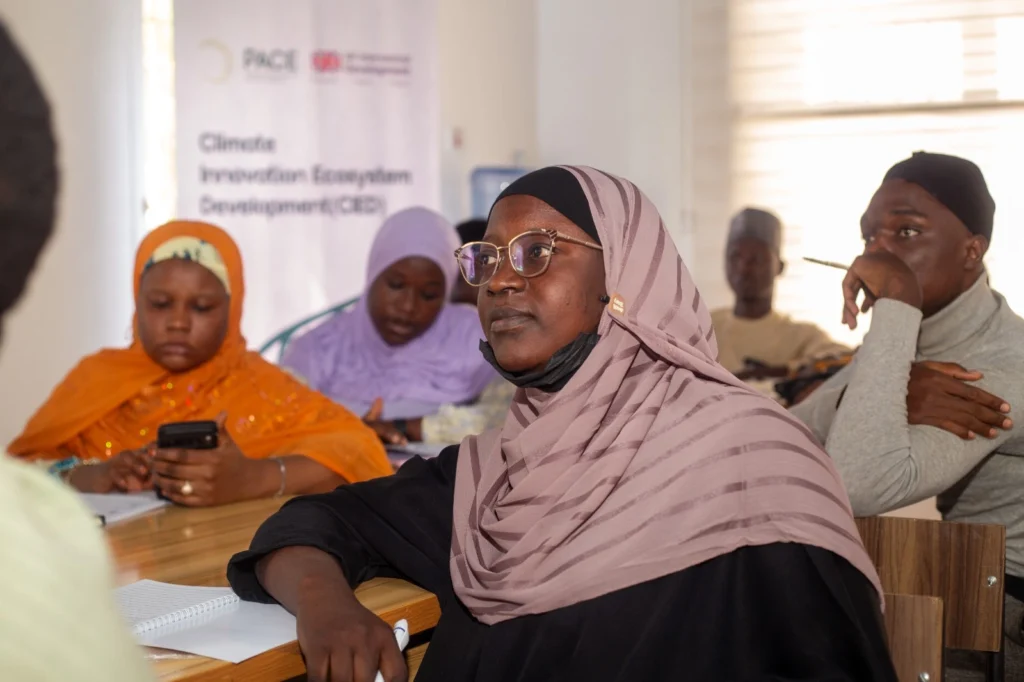
As we progress in the Climate Innovation Ecosystem Development (CIED) Program, the focus shifts from momentum to depth. This stage of the journey is about strengthening structure, sharpening clarity, and ensuring that every idea being developed is built on a solid and intentional foundation. Participants are challenged to think more critically, design more strategically, and align their ventures with long-term impact. The focus during this phase is on strengthening participants’ thinking, design, and structuring of their climate ventures. The learning begins with structured problem-analysis tools, specifically the Fishbone (Cause-and-Effect) Model and the 5 Whys technique. These frameworks guide participants in systematically diagnosing climate-related challenges before designing or scaling solutions. Through the Fishbone Model, the participants are categorizing potential causes such as operational inefficiencies, resource constraints, policy limitations, technological gaps, behavioral patterns, and environmental factors. The 5 Whys technique strengthens this analysis by encouraging iterative questioning to uncover deeper systemic root causes rather than symptoms. Following this investigation, Domain Definition enables participants to clearly define the specific problem domain, the boundaries of their solution space, the stakeholders involved, and the broader environmental and economic context. This ensures that every climate solution is built on validated, well-understood problems grounded in rigorous analysis. Rather than rushing into refining solutions, participants pause to examine the systems behind the problems critically. They ask deeper questions, explore contributing factors, and challenge their own assumptions. This stage ensures that every business idea moving forward is anchored in evidence and clarity, not guesswork. With this clarity established, the focus shifts to structured business design using the Economic Business Model Canvas (BMC). Participants map out their Customer Segments, Value Propositions, Revenue Streams, Cost Structure, Key Activities, and Key Partners. This process strengthens their understanding of financial viability and ensures their ventures are economically sustainable. Facilitated feedback and peer learning encourage founders to refine their cost assumptions, examine the realism of their revenue streams, and ensure that their value propositions clearly align with the needs of their identified customers. The goal remains clear: a climate-focused startup must also be a financially sound business. The session then expands to the Environmental Layer of the Business Model Canvas, where startups assess Resource Inputs, Energy Use, Waste Generation, Emissions, Environmental Footprint, and Lifecycle Impact. This stage emphasizes aligning business operations with measurable environmental responsibility. Participants are encouraged to think beyond good intentions and examine the actual environmental implications of their models. They explore how materials are sourced, how energy is consumed, what waste is produced, and how their solutions create positive environmental outcomes. This strengthens the connection between their climate mission and their operational design. Finally, participants integrate the Social Layer of the Triple Layer Business Model Canvas, focusing on Stakeholder Mapping, Social Value Creation, Community Impact, Employment Generation, Ethical Considerations, and Risk Mitigation. They are guided to connect all three layers: economic, environmental, and social, into one coherent model. At this stage, the emphasis is on integration. Founders are encouraged to see their startups as interconnected systems where profitability, environmental stewardship, and social responsibility reinforce one another. The exercise helps participants build ventures that are not only viable and climate-aligned, but also inclusive and community-conscious. By the end of this phase, participants have developed structured, climate-smart business models rooted in analysis, strengthened by financial logic, aligned with environmental goals, and responsive to social realities. It marks meaningful progress in the CIED journey, transforming ideas into integrated systems designed for sustainable impact.  

The Math of Sustainability Towards Net Zero Read More »