Programmes

Get latest programmes details from Startup Kano

From Fragmentation to Flow: How CIED is Powering Climate Innovation in Kano

As the Board Chair of Startup Kano, Aisha Tofa noted at the outset of the programme, “Today is not just about pitches. It is about possibility. It is about capital meeting opportunity… and shifting the narrative of Northern Nigeria, from untapped potential to activated opportunity.” She further emphasised the core intent behind the initiative: “CIED was designed… to move startups from potential to readiness and from readiness to investment.” This framing captures the essence of the Climate Innovation Ecosystem Development (CIED) Project, not simply as a programme, but as a system designed to connect ideas, structure, and capital in a way that enables real, scalable impact. Ecosystem Framing and Programme Launch​ Northern Nigeria has taken a deliberate step into the climate innovation space through the Climate Innovation Ecosystem Development (CIED) Project in Kano. Supported by PACE Nigeria and implemented by Startup Kano under the UK in Nigeria partnership, the CIED programme was designed as a structured ecosystem-building initiative that connected ideas to investment and impact. It did not function as a standalone training programme, but as a coordinated effort to build a climate innovation pipeline, one that supports startups from ideation through to investment readiness and scalable impact. At the core of the initiative was a recognition of a persistent challenge: many climate solutions fail not due to lack of innovation, but because the ecosystem around them is fragmented. While policies, funding opportunities, and support structures exist, they are often disconnected, making it difficult for startups to navigate the pathway from idea to implementation. The CIED programme was established to address this gap by intentionally building those missing linkages. Multi-Stakeholder Co-Creation and Policy Alignment​ The journey began with a multi-stakeholder roundtable and co-creation process that brought together government institutions, development partners, academia, innovators, and financial actors. Together, they worked to shape a practical toolkit that translates the Kano State climate change policy into actionable pathways for entrepreneurs. This process laid the foundation for stronger collaboration across the ecosystem and reinforced a shared commitment to making climate innovation work in practice, particularly for youth and women-led startups in Northern Nigeria. Pilot Cohort Selection and Venture Development Journey ​ At the centre of the programme was the 2026 CIED Pilot Cohort. Selected from a highly competitive pool of over 120 applicants in Kano, 13 climate innovators represented a diverse set of solutions focused on climate adaptation, clean energy, and waste management. Throughout the programme, they underwent an intensive journey of climate finance readiness, venture building, and investor engagement, equipping them with the skills and tools needed to access climate finance and scale their solutions within their communities. Bootcamp: Capacity Building, Finance Readiness and Systems Thinking The Climate Innovation Ecosystem Development Bootcamp served as the programme’s core capacity-building engine. Participants were guided through a structured progression that began with deep problem analysis using tools such as the Fishbone (Cause-and-Effect) Model and the 5 Whys technique. This ensured that solutions were grounded in real systemic issues rather than surface-level assumptions. They then moved into structured business model development using the Triple Layer Business Model Canvas, integrating economic viability, environmental responsibility, and social impact into a single coherent framework. This helped participants design startups that were not only financially sustainable but also environmentally responsible and socially relevant. As the programme progressed, participants engaged with Monitoring & Evaluation systems, ESG frameworks, and Social and Behavioural Change (SBC) concepts. These elements strengthened their ability to measure impact, align with investor expectations, and understand how behavioural dynamics influence climate outcomes. They also explored climate risk and sustainability exposure, gaining insight into how physical and transitional climate risks affect business survival, regulatory compliance, and long-term investment readiness. A strong emphasis was also placed on climate finance, where participants learned how funding flows within the climate ecosystem, how investment decisions are made, and how startups can position themselves to access available opportunities within Nigeria’s evolving climate finance landscape. Across all these layers, the programme contributed to the formation of a more structured ecosystem, one that connects policy to practice, innovation to finance, and ideas to implementation. Startup Reflections and Learning Outcomes Insights gathered from participating startups further reinforce the programme’s impact beyond the structured sessions and Demo Day outcomes. Reflecting on their experience through post-programme feedback, Her Ecospace, which emerged as the overall winner, described the programme as “an intensive, eye-opening journey that bridged the gap between traditional business modelling and climate-conscious entrepreneurship.” The team noted that it “provided a structured environment to refine our mission of turning waste into value,” highlighting the clarity and direction gained throughout the process. They further emphasised the transformative shift in their approach, stating that “the transition from a traditional Business Model Canvas (BMC) to a Triple Layered Business Model Canvas (TLBMC) was transformative,” alongside gaining “deep insights into ESG (Environmental, Social, and Governance) standards and Empathy Mapping.” This, they explained, enabled them to understand better both their community and the environmental implications of their work. Reflecting on the broader impact, they noted that “the programme significantly sharpened our focus at Her EcoSpace,” helping them move beyond simply “making products” to understanding their role within “a broader climate-ready ecosystem,” with a clearer roadmap for scalability and resilience. They also highlighted the climate readiness sessions as particularly impactful, noting that facilitators effectively translated complex global climate goals into practical, locally relevant actions, while suggesting that more hands-on sessions on navigating Nigeria’s green finance landscape could further strengthen future cohorts. Similarly, Beta Agric (Bera Tomato), which secured second place at the Demo Day, described the programme as “a very integral and rigorous training program that challenges thought processes and facilitates structured and strategic planning for overall business growth and climate alignment.” A major takeaway for the team was “our TLBMC design,” which has become central to their operations. They further explained that the programme helped bring their climate-smart business model to life and guided them in “creating, enacting and implementing our ESG policy, ensuring that it guides our operations. ”Reflecting on their experience, they noted

From Fragmentation to Flow: How CIED is Powering Climate Innovation in Kano Read More »
The Math of Sustainability Towards Net Zero

As we progress in the Climate Innovation Ecosystem Development (CIED) Program, the focus shifts from momentum to depth. This stage of the journey is about strengthening structure, sharpening clarity, and ensuring that every idea being developed is built on a solid and intentional foundation. Participants are challenged to think more critically, design more strategically, and align their ventures with long-term impact. The focus during this phase is on strengthening participants’ thinking, design, and structuring of their climate ventures. The learning begins with structured problem-analysis tools, specifically the Fishbone (Cause-and-Effect) Model and the 5 Whys technique. These frameworks guide participants in systematically diagnosing climate-related challenges before designing or scaling solutions. Through the Fishbone Model, the participants are categorizing potential causes such as operational inefficiencies, resource constraints, policy limitations, technological gaps, behavioral patterns, and environmental factors. The 5 Whys technique strengthens this analysis by encouraging iterative questioning to uncover deeper systemic root causes rather than symptoms. Following this investigation, Domain Definition enables participants to clearly define the specific problem domain, the boundaries of their solution space, the stakeholders involved, and the broader environmental and economic context. This ensures that every climate solution is built on validated, well-understood problems grounded in rigorous analysis. Rather than rushing into refining solutions, participants pause to examine the systems behind the problems critically. They ask deeper questions, explore contributing factors, and challenge their own assumptions. This stage ensures that every business idea moving forward is anchored in evidence and clarity, not guesswork. With this clarity established, the focus shifts to structured business design using the Economic Business Model Canvas (BMC). Participants map out their Customer Segments, Value Propositions, Revenue Streams, Cost Structure, Key Activities, and Key Partners. This process strengthens their understanding of financial viability and ensures their ventures are economically sustainable. Facilitated feedback and peer learning encourage founders to refine their cost assumptions, examine the realism of their revenue streams, and ensure that their value propositions clearly align with the needs of their identified customers. The goal remains clear: a climate-focused startup must also be a financially sound business. The session then expands to the Environmental Layer of the Business Model Canvas, where startups assess Resource Inputs, Energy Use, Waste Generation, Emissions, Environmental Footprint, and Lifecycle Impact. This stage emphasizes aligning business operations with measurable environmental responsibility. Participants are encouraged to think beyond good intentions and examine the actual environmental implications of their models. They explore how materials are sourced, how energy is consumed, what waste is produced, and how their solutions create positive environmental outcomes. This strengthens the connection between their climate mission and their operational design. Finally, participants integrate the Social Layer of the Triple Layer Business Model Canvas, focusing on Stakeholder Mapping, Social Value Creation, Community Impact, Employment Generation, Ethical Considerations, and Risk Mitigation. They are guided to connect all three layers: economic, environmental, and social, into one coherent model. At this stage, the emphasis is on integration. Founders are encouraged to see their startups as interconnected systems where profitability, environmental stewardship, and social responsibility reinforce one another. The exercise helps participants build ventures that are not only viable and climate-aligned, but also inclusive and community-conscious. By the end of this phase, participants have developed structured, climate-smart business models rooted in analysis, strengthened by financial logic, aligned with environmental goals, and responsive to social realities. It marks meaningful progress in the CIED journey, transforming ideas into integrated systems designed for sustainable impact.  

The Math of Sustainability Towards Net Zero Read More »

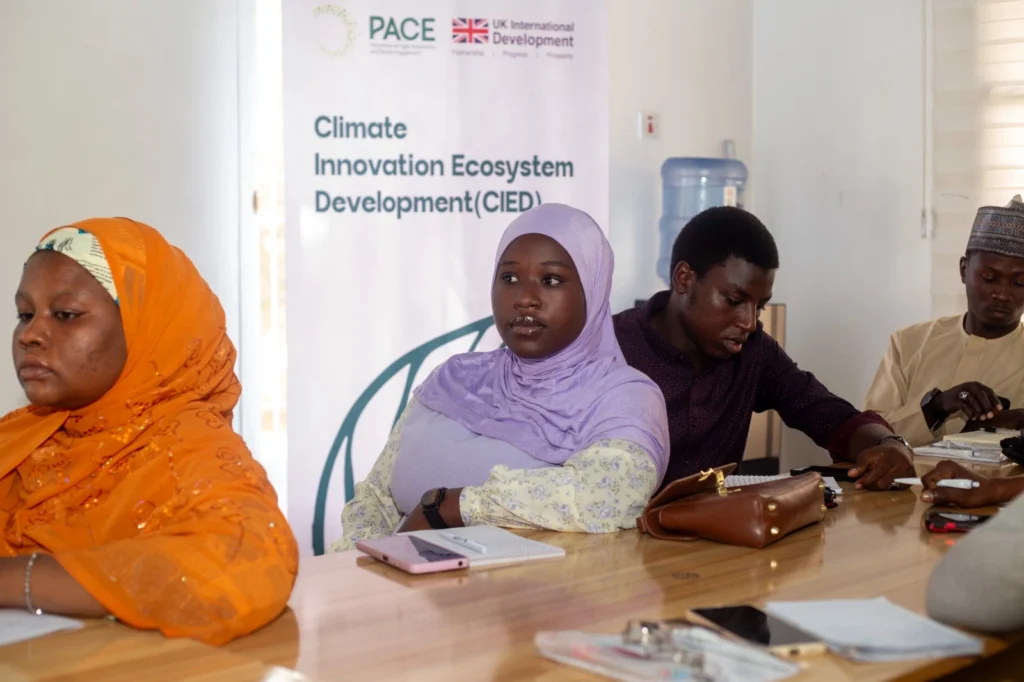
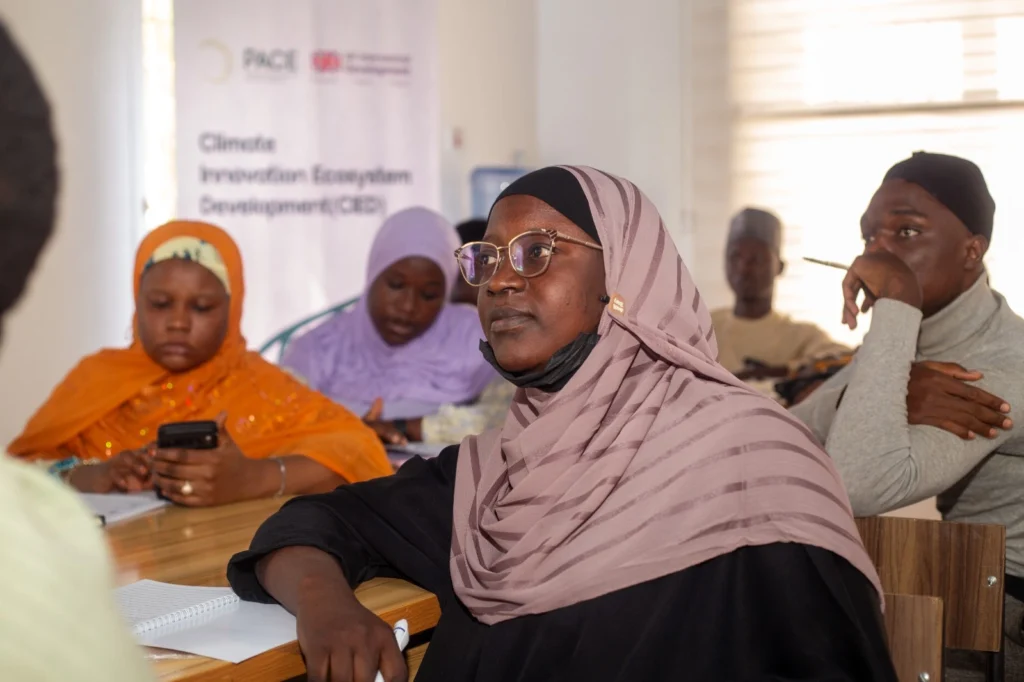
Startup founders participating in a CIED climate innovation bootcamp workshop at Startup Kano.

From Policy to Progress: The Visionaries Redefining Kano’s Green Future

Kano has always been a city built on trade, grit, and innovation. But as we move deeper into the 21st century, our founders are facing a new challenge: How do we build businesses that don’t just make a profit, but also protect our environment? This week at the Startup Kano hub, we saw the answer in action. We are currently in Week 2 of the Climate Innovation Ecosystem Development (CIED) Bootcamp, supported by the FCO-funded PACE programme, and the transformation from “local ideas” to “globally competitive business models” is well underway. The “Aha!” Moments: A Shift in Mindset Our Week 1 “Pulse Check” captured the exact moments when the lightbulbs went off. For Her EcoSpace, it was an emotional realization: “That the ‘Maman Bola’ I used to be could be something this worth. I’m excited to take it to the next level, from a local idea into a globally climate-smart business.” While tools like the SCAMPER model helped founders from CyclexAfrica and Eco pipes Nigeria redefine their products, the real magic happened when our 12 startups began aligning their “why” with the “how” of climate finance. Meet the Startups: Solving Kano’s Toughest Challenges The diversity of this cohort is a testament to the breadth of the green economy in Northern Nigeria. We have grouped our innovators into three powerful themes: 1. Waste-to-Wealth: The Circular Economy Leaders Kano generates massive volumes of agricultural, plastic, and electronic waste. Our startups are turning this “problem” into a resource: ● K-CAB (Moss Maison Global): They are tackling air pollution by turning leather and agricultural waste into eco-briquettes and biochar, providing clean energy and restoring soil health. ● Maeish Global & Cleanwave Recycling: These teams are professionalizing plastic management, turning chaotic waste streams into high-quality granules for manufacturers and organized “waste banks” for households. ● Threewaste Technologies: A climate-tech pioneer using a WebApp to turn electronic waste into value through “eco-credits” and rewards. ● NatureWorks Global Solutions: They are cleaning up our markets by converting organic waste into pesticides and fertilizers, ensuring food safety for all. 2. Digital-Enabled Transparency: Building Trust One of the biggest barriers to climate finance is a lack of data. Our tech-driven startups are fixing the “Broken Market”: ● CyclexAfrica: Using AI and USSD codes to turn fragmented recycling activity into a scalable, data-driven supply network with real-time payment settlements. ● Genesys One: Revolutionizing artisanal mining by providing a digital traceability system. By documenting mineral origin and ESG practices, they are making African minerals “bankable” in formal global markets. 3. Climate-Smart Agriculture: Securing Our Food Future With low productivity and high climate risks, our food systems need a new blueprint: ● Avangard Farm & Agro Supply: Provides climate-smart farming solutions through greenhouse production, regenerative open-field farming, and agro-input supply, combined with hands-on technical support. ● Beta Agric Ventures: Directly tackling the recurring post-harvest loss of tomatoes, ensuring that farmers’ hard work doesn’t end up as waste. ● FINBA & Saudat Farms: These enterprises are proving that poultry and crop production can be zero-waste and regenerative, restoring the land while fighting malnutrition with low-cost protein. Week 2 Focus: The “Grind” of Finance Readiness This week, the focus shifted to the Business Model Canvas (BMC). For many, this was a “Pivot Week.” It’s one thing to have a solution; it’s another to ensure your pricing model is sustainable. We challenged our founders to identify their “Cost of Impact”, asking them: How much does it actually cost to save one ton of carbon or support one smallholder farmer? The feedback for our facilitators has been overwhelming. As the team at Beta Agric Ventures noted, they finally understand “how to reform and link a business model to being finance-ready.” What’s Next? As we wrap up the “Business Model and Foundation” phase, we move into Week 3: Climate Readiness I. We will be joined by experts to discuss Nigeria’s Climate Landscape and specific funding instruments. Kano isn’t just adapting to the future; through these 12 founders, we are building it.

From Policy to Progress: The Visionaries Redefining Kano’s Green Future Read More »