Programmes

Get latest programmes details from Startup Kano

The Math of Sustainability Towards Net Zero

As we progress in the Climate Innovation Ecosystem Development (CIED) Program, the focus shifts from momentum to depth. This stage of the journey is about strengthening structure, sharpening clarity, and ensuring that every idea being developed is built on a solid and intentional foundation. Participants are challenged to think more critically, design more strategically, and align their ventures with long-term impact. The focus during this phase is on strengthening participants’ thinking, design, and structuring of their climate ventures. The learning begins with structured problem-analysis tools, specifically the Fishbone (Cause-and-Effect) Model and the 5 Whys technique. These frameworks guide participants in systematically diagnosing climate-related challenges before designing or scaling solutions. Through the Fishbone Model, the participants are categorizing potential causes such as operational inefficiencies, resource constraints, policy limitations, technological gaps, behavioral patterns, and environmental factors. The 5 Whys technique strengthens this analysis by encouraging iterative questioning to uncover deeper systemic root causes rather than symptoms. Following this investigation, Domain Definition enables participants to clearly define the specific problem domain, the boundaries of their solution space, the stakeholders involved, and the broader environmental and economic context. This ensures that every climate solution is built on validated, well-understood problems grounded in rigorous analysis. Rather than rushing into refining solutions, participants pause to examine the systems behind the problems critically. They ask deeper questions, explore contributing factors, and challenge their own assumptions. This stage ensures that every business idea moving forward is anchored in evidence and clarity, not guesswork. With this clarity established, the focus shifts to structured business design using the Economic Business Model Canvas (BMC). Participants map out their Customer Segments, Value Propositions, Revenue Streams, Cost Structure, Key Activities, and Key Partners. This process strengthens their understanding of financial viability and ensures their ventures are economically sustainable. Facilitated feedback and peer learning encourage founders to refine their cost assumptions, examine the realism of their revenue streams, and ensure that their value propositions clearly align with the needs of their identified customers. The goal remains clear: a climate-focused startup must also be a financially sound business. The session then expands to the Environmental Layer of the Business Model Canvas, where startups assess Resource Inputs, Energy Use, Waste Generation, Emissions, Environmental Footprint, and Lifecycle Impact. This stage emphasizes aligning business operations with measurable environmental responsibility. Participants are encouraged to think beyond good intentions and examine the actual environmental implications of their models. They explore how materials are sourced, how energy is consumed, what waste is produced, and how their solutions create positive environmental outcomes. This strengthens the connection between their climate mission and their operational design. Finally, participants integrate the Social Layer of the Triple Layer Business Model Canvas, focusing on Stakeholder Mapping, Social Value Creation, Community Impact, Employment Generation, Ethical Considerations, and Risk Mitigation. They are guided to connect all three layers: economic, environmental, and social, into one coherent model. At this stage, the emphasis is on integration. Founders are encouraged to see their startups as interconnected systems where profitability, environmental stewardship, and social responsibility reinforce one another. The exercise helps participants build ventures that are not only viable and climate-aligned, but also inclusive and community-conscious. By the end of this phase, participants have developed structured, climate-smart business models rooted in analysis, strengthened by financial logic, aligned with environmental goals, and responsive to social realities. It marks meaningful progress in the CIED journey, transforming ideas into integrated systems designed for sustainable impact.  
The Math of Sustainability Towards Net Zero Read More »

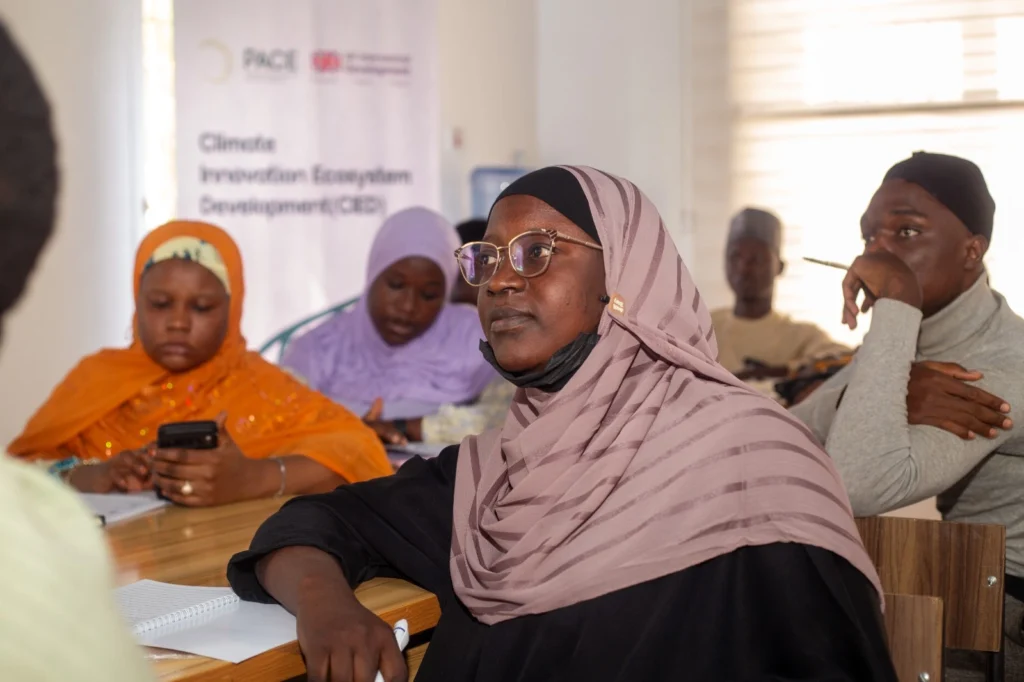
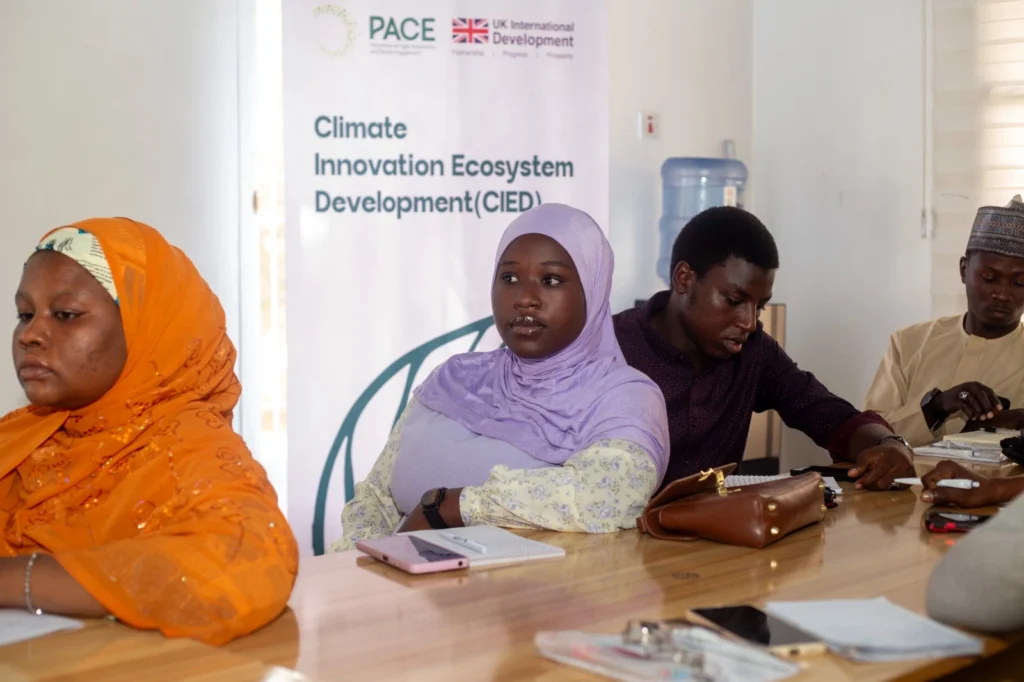
Startup founders participating in a CIED climate innovation bootcamp workshop at Startup Kano.

From Policy to Progress: The Visionaries Redefining Kano’s Green Future

Kano has always been a city built on trade, grit, and innovation. But as we move deeper into the 21st century, our founders are facing a new challenge: How do we build businesses that don’t just make a profit, but also protect our environment? This week at the Startup Kano hub, we saw the answer in action. We are currently in Week 2 of the Climate Innovation Ecosystem Development (CIED) Bootcamp, supported by the FCO-funded PACE programme, and the transformation from “local ideas” to “globally competitive business models” is well underway. The “Aha!” Moments: A Shift in Mindset Our Week 1 “Pulse Check” captured the exact moments when the lightbulbs went off. For Her EcoSpace, it was an emotional realization: “That the ‘Maman Bola’ I used to be could be something this worth. I’m excited to take it to the next level, from a local idea into a globally climate-smart business.” While tools like the SCAMPER model helped founders from CyclexAfrica and Eco pipes Nigeria redefine their products, the real magic happened when our 12 startups began aligning their “why” with the “how” of climate finance. Meet the Startups: Solving Kano’s Toughest Challenges The diversity of this cohort is a testament to the breadth of the green economy in Northern Nigeria. We have grouped our innovators into three powerful themes: 1. Waste-to-Wealth: The Circular Economy Leaders Kano generates massive volumes of agricultural, plastic, and electronic waste. Our startups are turning this “problem” into a resource: ● K-CAB (Moss Maison Global): They are tackling air pollution by turning leather and agricultural waste into eco-briquettes and biochar, providing clean energy and restoring soil health. ● Maeish Global & Cleanwave Recycling: These teams are professionalizing plastic management, turning chaotic waste streams into high-quality granules for manufacturers and organized “waste banks” for households. ● Threewaste Technologies: A climate-tech pioneer using a WebApp to turn electronic waste into value through “eco-credits” and rewards. ● NatureWorks Global Solutions: They are cleaning up our markets by converting organic waste into pesticides and fertilizers, ensuring food safety for all. 2. Digital-Enabled Transparency: Building Trust One of the biggest barriers to climate finance is a lack of data. Our tech-driven startups are fixing the “Broken Market”: ● CyclexAfrica: Using AI and USSD codes to turn fragmented recycling activity into a scalable, data-driven supply network with real-time payment settlements. ● Genesys One: Revolutionizing artisanal mining by providing a digital traceability system. By documenting mineral origin and ESG practices, they are making African minerals “bankable” in formal global markets. 3. Climate-Smart Agriculture: Securing Our Food Future With low productivity and high climate risks, our food systems need a new blueprint: ● Avangard Farm & Agro Supply: Provides climate-smart farming solutions through greenhouse production, regenerative open-field farming, and agro-input supply, combined with hands-on technical support. ● Beta Agric Ventures: Directly tackling the recurring post-harvest loss of tomatoes, ensuring that farmers’ hard work doesn’t end up as waste. ● FINBA & Saudat Farms: These enterprises are proving that poultry and crop production can be zero-waste and regenerative, restoring the land while fighting malnutrition with low-cost protein. Week 2 Focus: The “Grind” of Finance Readiness This week, the focus shifted to the Business Model Canvas (BMC). For many, this was a “Pivot Week.” It’s one thing to have a solution; it’s another to ensure your pricing model is sustainable. We challenged our founders to identify their “Cost of Impact”, asking them: How much does it actually cost to save one ton of carbon or support one smallholder farmer? The feedback for our facilitators has been overwhelming. As the team at Beta Agric Ventures noted, they finally understand “how to reform and link a business model to being finance-ready.” What’s Next? As we wrap up the “Business Model and Foundation” phase, we move into Week 3: Climate Readiness I. We will be joined by experts to discuss Nigeria’s Climate Landscape and specific funding instruments. Kano isn’t just adapting to the future; through these 12 founders, we are building it.

From Policy to Progress: The Visionaries Redefining Kano’s Green Future Read More »

Empowering MSMEs: Startup Kano Participates in GIZ Digital Skills for Entrepreneurs Training of Trainers Workshop

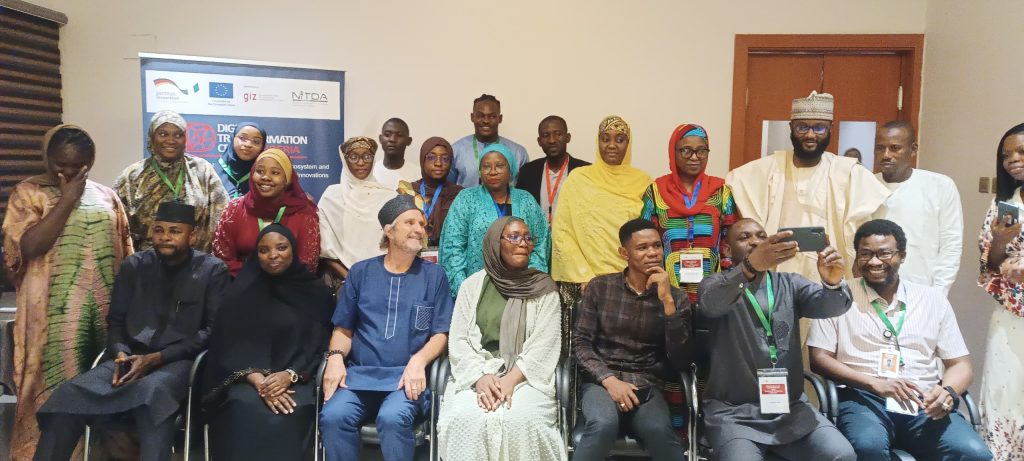
The journey towards digital transformation for Micro, Small, and Medium Enterprises (MSMEs) in Nigeria took a significant leap forward recently. A select group of trainers and mentors were invited to participate in a specialized Training of Trainers and Mentors (ToTM) workshop, organized by the Deutsche Gesellschaft für Internationale Zusammenarbeit (GIZ). This intense three-day workshop, held from August 13th to 15th, was designed to equip participants with the skills and knowledge necessary to deliver the Digital Skills for Entrepreneurs (DSE) course, a key initiative aimed at enhancing digital literacy and entrepreneurship across the country. Among the participants were representatives from Startup Kano Workshop Objectives The workshop aimed to ensure that participants: Gained a comprehensive understanding of the Digital Skills for Entrepreneurs Course offered by GIZ’s Digital Transformation Center (DTC). Acquired knowledge of digital tools and solutions critical for enhancing digital literacy and skills among Micro, Small, and Medium Enterprises (MSMEs), particularly those owned by youth and women. Enhanced their training and mentoring capabilities, adopting methodologies tailored to the DSE course. Validated the curriculum against Nigerian industry standards and the latest digital trends, ensuring relevance and applicability to local MSMEs. Became familiar with various topics and subtopics within the digital transformation roadmap. To maximize the benefits of the workshop, participants adhered to key engagement principles, which included active participation, readiness for engagement, punctuality, and a commitment to late-hour work. Participants were also required to provide their digital devices, have relevant apps downloaded, and review materials before sessions. Additionally, there was an emphasis on the willingness to voluntarily support and guide the implementation process post-training. The Facilitation Team The workshop was facilitated by an esteemed team of experts including Peik Bruhns (GOPA Team Leader), Ismaeel Lawal, Nuhu Longkat, Dr. Ed Canela (MSME development and digital solutions experts), Dr. Samuel Jackson, Avess Abutu, Dr. Natasha Aduloju-Ajijola (DSE material developers), along with Gbeke Oshinowo, Grace Okewale (DTC Team), and Loveth Afekhai (GOPA Administrator). Their combined expertise ensured that participants were thoroughly equipped with the necessary knowledge and skills. The participation of our trainers and mentors in this workshop marks a significant step forward in our commitment to driving digital transformation among MSMEs in Nigeria. The knowledge and skills gained will be instrumental in the rollout of the DSE course, ensuring that we continue to empower youth and women entrepreneurs across the region. Startup Kano remains dedicated to fostering a culture of innovation and entrepreneurship, and we look forward to implementing the learnings from this workshop to further support the growth and development of MSMEs in Nigeria.

Empowering MSMEs: Startup Kano Participates in GIZ Digital Skills for Entrepreneurs Training of Trainers Workshop Read More »